Why OEE Tracking Fails on the Plant Floor
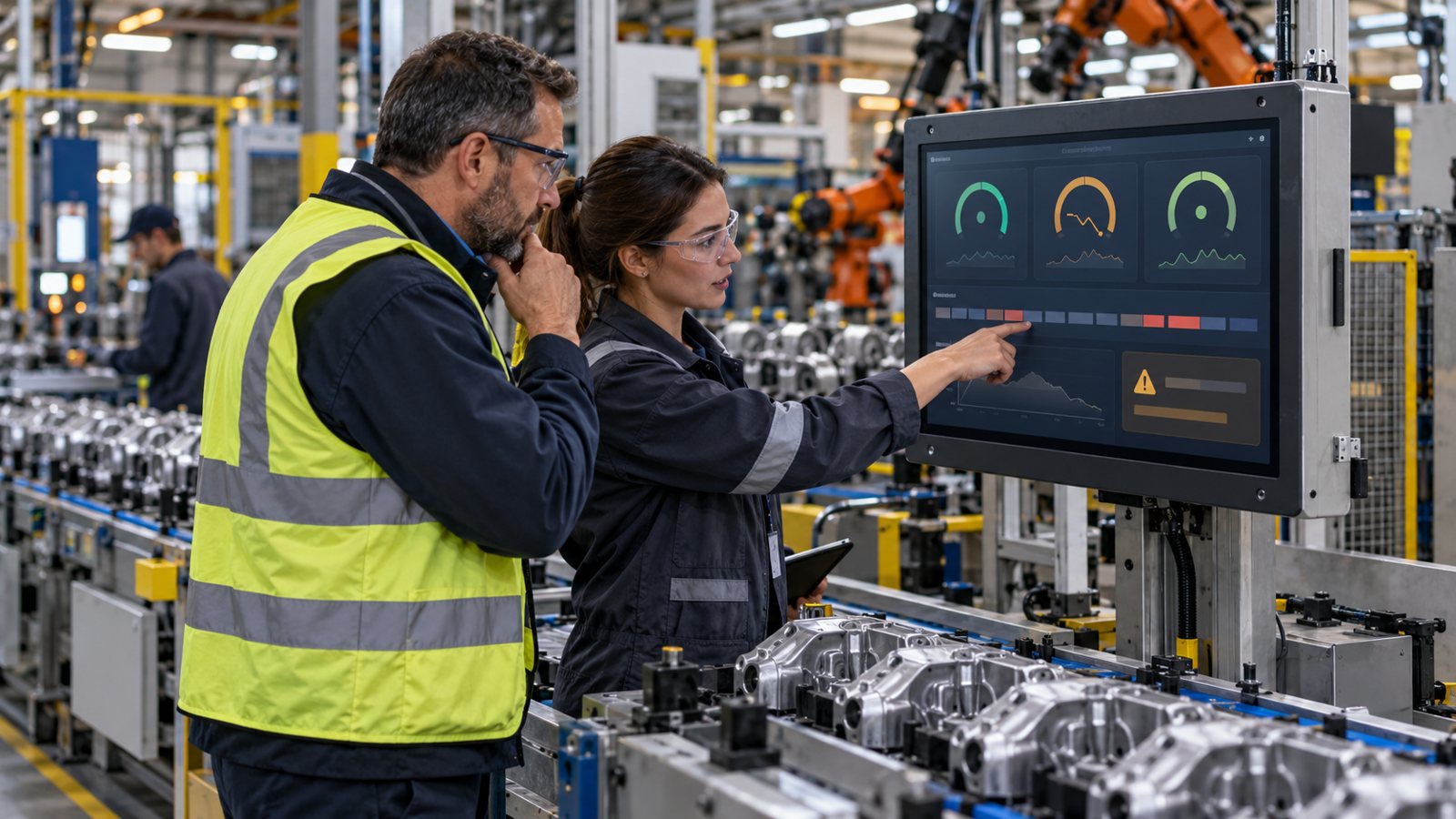
Most plants I visit already track OEE. They have a dashboard, a daily report, and a number for each line. Yet when OEE drops, it can still take hours to find out what happened.
The problem is that OEE is often treated as a score to review after the shift. By then, the line has moved on. Operators have dealt with several other issues, and the details behind a short stop or a slow cycle are harder to recover.
OEE is made up of three things: Availability, Performance, and Quality. Looking at those three numbers while production is running tells a much more useful story than looking at the final OEE score alone.
If Availability is falling, the team needs to know what stopped the line and for how long. If Performance is falling, the line may still be running, just slower than expected. If Quality is falling, the team needs to know when defects started, which parts were affected, and what changed around that time.
Those are different problems. They need different responses.
Near real time OEE makes it possible to catch the loss while there is still a chance to investigate it. A supervisor might see Performance declining on one station and ask about it before the shift ends. A quality engineer might notice defects increasing after a changeover. Maintenance might see a pattern of brief stops that never appeared on the downtime report because each one seemed too small to record.
The next step is root cause analysis. A useful system should help people connect the OEE loss to the events around it: machine alarms, changeovers, material changes, operator notes, inspection results, and previous occurrences. It should show the evidence, so the team can judge whether a suggested cause makes sense.
This is where an AI recommendation engine can help. If the line has seen a similar combination of symptoms before, it can surface what the team checked last time and what action worked. It can suggest the next checks in order, based on the current data. The engineer or supervisor still decides what to do, but they have a better starting point than a blank incident form.
For this to work, the data has to reflect how the plant actually operates. The system needs to know which machine belongs to which line, what part is being made, what the expected cycle time is, and where a quality check happens. Without that context, even a fast dashboard can give you a number that is difficult to act on.
That is the kind of manufacturing app we want teams to be able to build with SubAssembly.ai: one that brings live production data and plant context together, helps the team investigate losses, and turns what they learn into better recommendations over time.
The goal is simple. When OEE drops, the team should know which part of APQ changed, what happened around it, and what to check next—while they can still do something about it.