The Answer Is in the Manual. Can Anyone Find It?
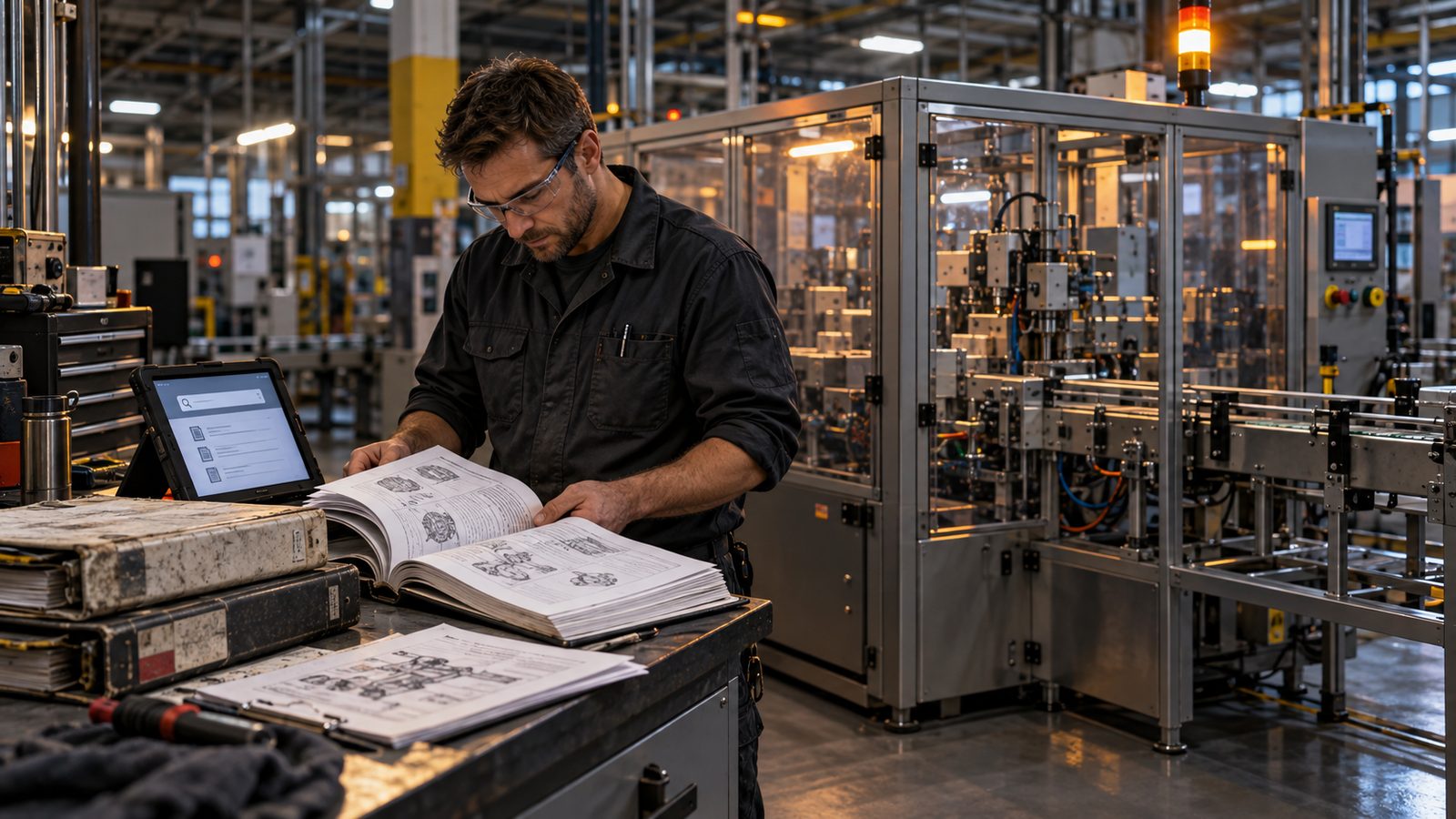
A machine stops. The maintenance technician recognizes the alarm but has not seen it in months. The manual is somewhere on a shared drive. There are three versions of it, and nobody is certain which one matches this machine.
So the technician calls the person who fixed it last time.
That person usually knows more than the manual. They remember that the alarm appeared after a particular changeover, which sensor caused it, and what to check first. The problem is that this knowledge often lives in a person’s head or in a short work order note. The next technician has to find it all over again.
Plants have plenty of documentation: equipment manuals, electrical drawings, standard work, maintenance logs, and troubleshooting guides. Having the documents is only the first step. The hard part is getting the right answer for the specific machine and problem in front of you.
Imagine asking: “What does alarm 204 mean on Line 3’s case packer?” A useful answer would identify the correct manual and revision, point to the relevant section, and show the checks in the order the document gives them. If the answer is not in the available documentation, the system should say so. A confident guess is worse than an honest gap when someone is working on equipment.
Past maintenance work matters too. The manual may describe what the alarm means; a work order may show that the same machine had the alarm twice last month after a sensor was replaced. Both are useful, but they are different kinds of evidence. The technician needs to see where each answer came from.
This is the kind of problem I’m interested in solving with SubAssembly.ai. A plant should be able to bring its manuals, logs, and other working documents together and ask a question in plain language. The answer should lead people back to the source, so they can verify it and decide what to do.
For maintenance work, that verification matters. A document search tool does not replace the plant’s safety procedures or the judgment of an authorized technician. It can, however, cut down the time spent hunting through folders while the line waits.
The best troubleshooting knowledge in a plant is usually already there. The challenge is making it available to the next person who needs it.