
The Shift Ended. The Problem Didn’t.
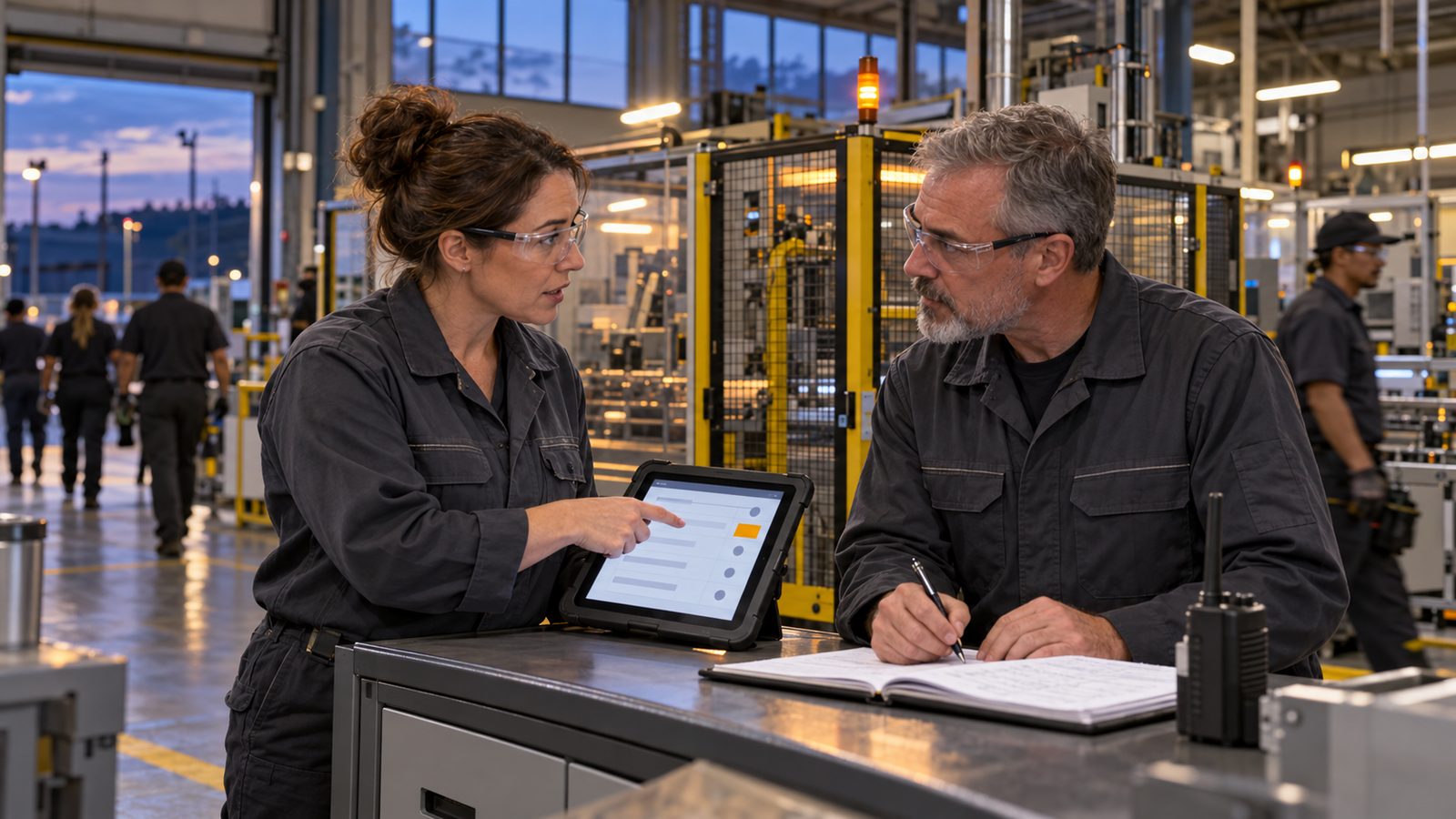
“Line 2 had a few issues. Keep an eye on it.”
That sounds like a handover. But it leaves the next shift with plenty to work out.
What issues? When did they happen? What was checked? Is the line running normally now? Does someone still need to come back?
The outgoing team may know all of this. They have spent the shift dealing with it. A short note makes sense to them because they remember the details around it. The incoming team has only the note.
Take an intermittent sensor fault. Maintenance cleans the sensor, the machine restarts, and the shift ends. If the handover simply says “sensor fixed,” the next crew may reasonably assume the job is closed.
But perhaps the technician intended to return after the next changeover. Perhaps the fault has occurred three times already. Perhaps the replacement sensor is on order.
Those details change what the next team should do.
A useful handover record should capture the current condition, what happened, what action was taken, and what remains open. It should name the person responsible for the next action. The incoming team should be able to ask questions and confirm that they understand what they are taking over.
The UK Health and Safety Executive’s guidance describes handover as preparation, an exchange between teams, and a check by the people assuming responsibility. It recommends both written records and direct, two-way communication. That is a useful principle for any plant designing a handover process.
Software can make that conversation easier to prepare for.
Instead of rewriting the shift’s events from memory, a handover app could bring together open maintenance jobs, quality holds, recurring stops, and unfinished production actions. The supervisor reviews the information, adds the context, and confirms what needs attention.
AI can help draft that summary, provided it preserves the uncertainty in the records. “Fault did not recur during the final hour” means something different from “fault resolved.” If a note is ambiguous, the system should ask for clarification before turning it into a definite statement.
There is also a simple way to check whether the process is working. Look at the last few shifts and ask how often the incoming team had to repeat an investigation because they could not find what the previous crew had done. That gives you a concrete problem to improve.
A shift handover app is the kind of focused tool teams can build with SubAssembly.ai. It can grow from the log or spreadsheet they already use, with fields and follow-up steps that match their plant.
The handover is complete when the next team understands the open work and knows who owns the next step. Ending a shift should not mean starting the investigation again.