
Your Production Schedule Was Right This Morning
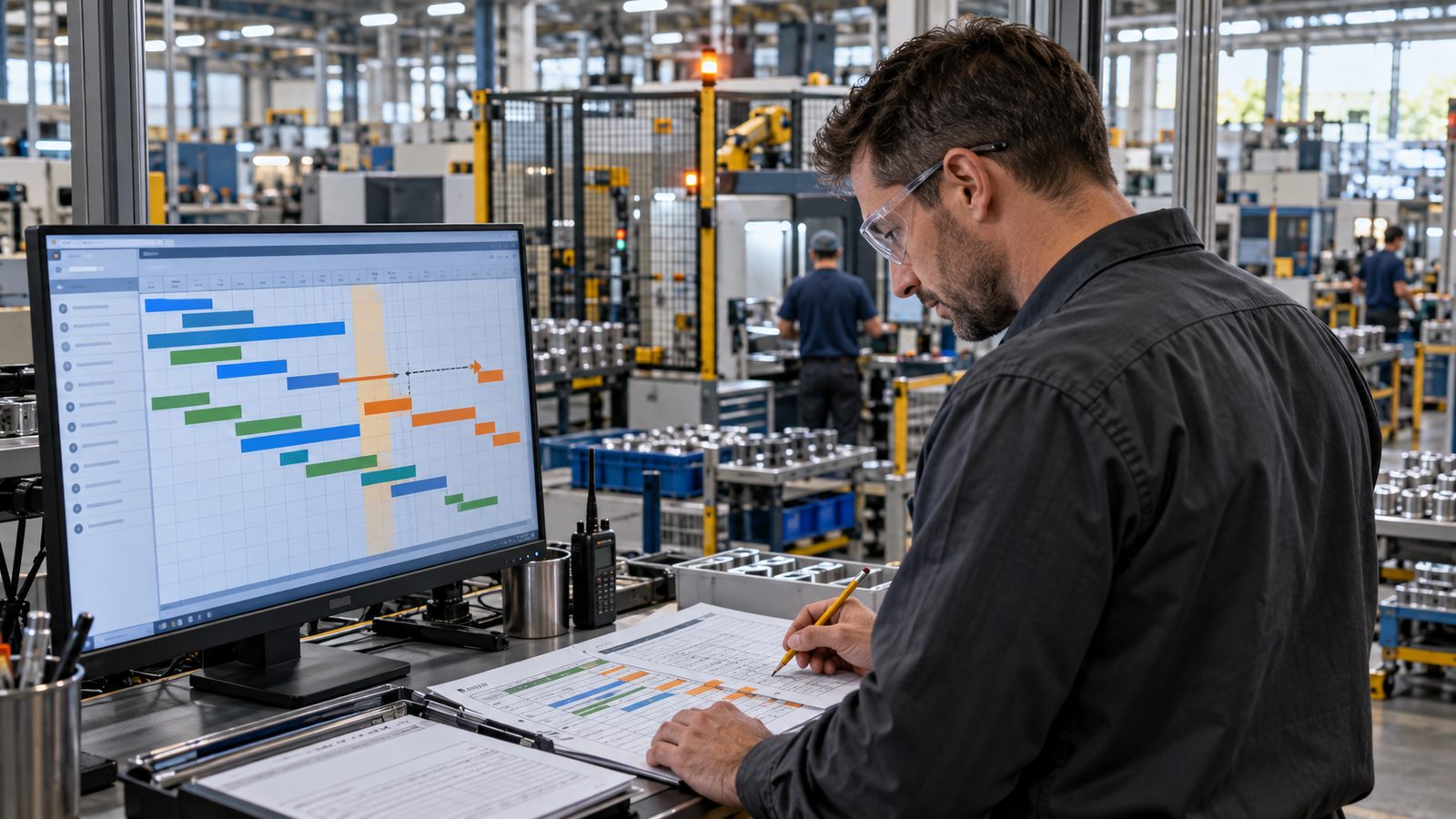
At 7 a.m., the production schedule makes sense. The orders are loaded, the lines have capacity, and materials are expected to arrive on time.
Then a machine goes down. A supplier delivery slips. Quality puts a batch on hold. A customer moves an order forward.
By 10 a.m., the planner is working from a schedule that describes a plant that no longer exists.
This is where scheduling gets difficult. Moving one job is rarely a one-line change. That job may need a particular machine, tooling, material, crew, and changeover window. Moving it can delay another job that uses the same resources. The planner has to understand the consequences before releasing a new plan.
In many plants, that work happens through a mix of spreadsheets, calls, and messages. Experienced planners are remarkably good at it. But it takes time to gather the latest information, and everyone else may still be looking at an earlier version of the schedule.
A useful scheduling app should start by showing what changed. Which orders are now at risk? Which material is short? When will the affected machine be available? What can still be made with the people, inventory, and equipment on hand?
Then it should offer a few workable options. For example: keep the current sequence and accept a late order; move another part to an available line; or run a shorter batch now and finish it when material arrives. Each option should show the tradeoff in plain terms. A planner can then choose and release the schedule the plant will follow.
That requires more than an order list. The app needs to understand how parts are made: their routing, the machines they can run on, changeover times, material requirements, shifts, and plant rules. It also needs current information from the floor. Without those details, a suggested schedule may look tidy on a screen and fail as soon as production tries to run it.
At SubAssembly.ai, we’re working on making it easier to build apps around that real plant context. Scheduling is a good example of why the context matters. The valuable answer is not simply “here is a new sequence.” It is “here is what changed, here are your feasible choices, and here is what each choice means for the orders.”
A production schedule will always change. The goal is to help the planner respond while there is still time to protect the day.